

Thursday, December 16, 2010
Blog #12
P1 looks all alike because they contain the dominate gene. Due to that their children will have the dominate trait instead of the recessive. This causes many of the offspring to be either heterozygous or homozygous with the dominate trait.


Thursday, December 9, 2010
Blog #11
 I believe that parents should be able to select the traits of their children. Children that are born with these selected traits will be freed of all kinds of horrible diseases. They wouldn't have a huge burden on their shoulder of having a disadvantage. Everything would be advanced with this children with good features. Technology would advance and the human race will continue and live on.
Thursday, November 18, 2010
Blog #10

Materials Needed:
2-one gallon crocks or glass jars
4 lbs. of cucumbers
3⁄4 cup kosher salt
1 bunch dill weed
1 head of garlic, peeled
1 onion, sliced
pinch of black peppercorns (optional)
10 grape leaves
1 gallon boiling water
Procedure:
1) Wash cucumbers and insert a bamboo skewer almost all the way in the end.
2) Slice onions, peel the garlic, and rinse the grape leaves.
3) Boil the water and dissolve salt in it.
4) Place 2 or 3 grape leaves at the bottom of the jar and as many cucumbers that fit. Then add 5-6 cloves of garlic, a handful of onion slices, a handful of dill weed, and a pinch of black peppercorns (optional). Put another layer of grape leaves on top.
5) Continue this until jar is full.
6) Pour the hot water into the jar and use a chopstick to poke away the bubbles.
7) Find a plastic lid (follower) that can fit in the jar and that will expand to cover the leaves.
8) Place a smaller jar to have pressure on the follower.
9) Finally, let the jar sit for a few days. (3-7).
10) When they taste right put them in the refridgerator and cover them with a lid.
Fermentation helps make the pickles easier to digest, create new minerals, and helps preserve them.
http://www.learningherbs.com/fermented_foods.html
Thursday, November 4, 2010
Blog #8
Procedures/Protections for entering a hot zone biocontainment facility.
-Guards to keep track of who's going in and out.
-Heavy brick-built building with cement
-Low amount of windows
(Entering)
-Undress of all clothing contacting with skin.
- Put on sterile scrub suit.
- Enter Level 2 ultraviolet lights room.
- Enter Level 3 and put on gloves.
- Apply sticky tape to keep the gloves on.
- Put on helmet and make sure it's on correctly.
- Zip up suit.
- Enter Level 4.
http://www.aia-nj.org/images/des_awards2007/usamriid.jpg
-Guards to keep track of who's going in and out.
-Heavy brick-built building with cement
-Low amount of windows
(Entering)
-Undress of all clothing contacting with skin.
- Put on sterile scrub suit.
- Enter Level 2 ultraviolet lights room.
- Enter Level 3 and put on gloves.
- Apply sticky tape to keep the gloves on.
- Put on helmet and make sure it's on correctly.
- Zip up suit.
- Enter Level 4.
http://www.aia-nj.org/images/des_awards2007/usamriid.jpg

Blog #9
The government should go extremely far in isolating infectious carriers. The army should also be involved in keeping them in a certain location. The reason why I believe this is because this disease can spread very quickly and kill millions, maybe even billions, of people. Just like shown in the movie "Outbreak" the Motaba disease will spread and infect the entire United States in only 48 hours. By using exterme measures, this can be prevented and instead of the whole country being killed, only a few thousand will perish and millions will be saved.
Thursday, October 14, 2010
Blog #6
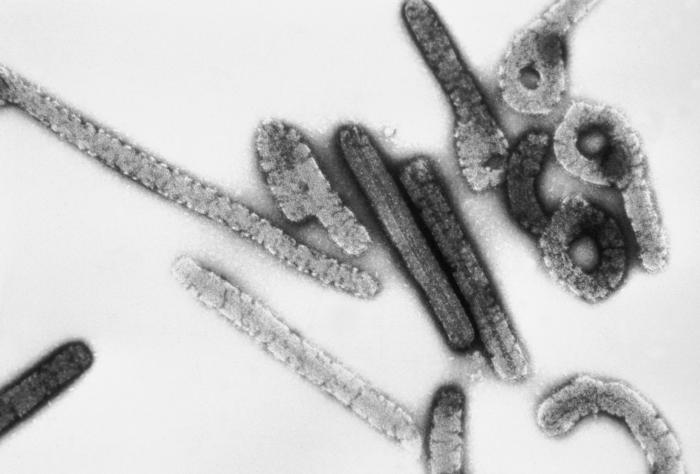
Virus
Devastating, Horrfying
Bleeding, headaches, vomiting
Infects,spreads,strengthens,destroys
Marburg

Devastating, Horrfying
Bleeding, headaches, vomiting
Infects,spreads,strengthens,destroys
Marburg
Thursday, October 7, 2010
Helpful and Harmful Bacteria.
There are many helpful bacteria that help people and other living creatures. E. coli is a rod shaped bacteria that live in the stomach of animals and they help them digest their food. Streptomyces is found in soil and it is the main building block of antibotics. There are also harmful bacterias such as bacilli which are responsible for many disease such as tuberculosis and influenza. On the other hand, there are some E. coli that can cause serious illness in humans through food poisoning. One other harmful bacteria is spirilla which causes serious diseases such as syphillis.
http://www.articlesbase.com/health-articles/these-are-some-of-the-helpful-bacteria-found-in-the-environment-around-us-356913.html
http://www.wisegeek.com/what-are-harmful-bacteria.htm
http://www.articlesbase.com/health-articles/these-are-some-of-the-helpful-bacteria-found-in-the-environment-around-us-356913.html
http://www.wisegeek.com/what-are-harmful-bacteria.htm
 |
| Bacilli |

 |
| Streptomyces |
 |
| Spirilla |

 |
| E. Coli |
Subscribe to:
Posts (Atom)